Putzschichten Manager
 Code
Code- Tech stack
 Next.js
 Tailwind CSS
 SupabaseTelegram Bot API
 Vercel
- Categories
- Scheduler
- Year
- 2026
Motivation
At our free church, several groups coordinate the cleaning shifts for the community rooms — repetitive processes that always run the same way are a natural fit for automation. Who's cleaning this week? Who was responsible last time? Who's on vacation right now? These questions come up every week — and that's exactly what software is made for. We're kicking off a test phase now to see how it holds up in everyday use.
UX · UI
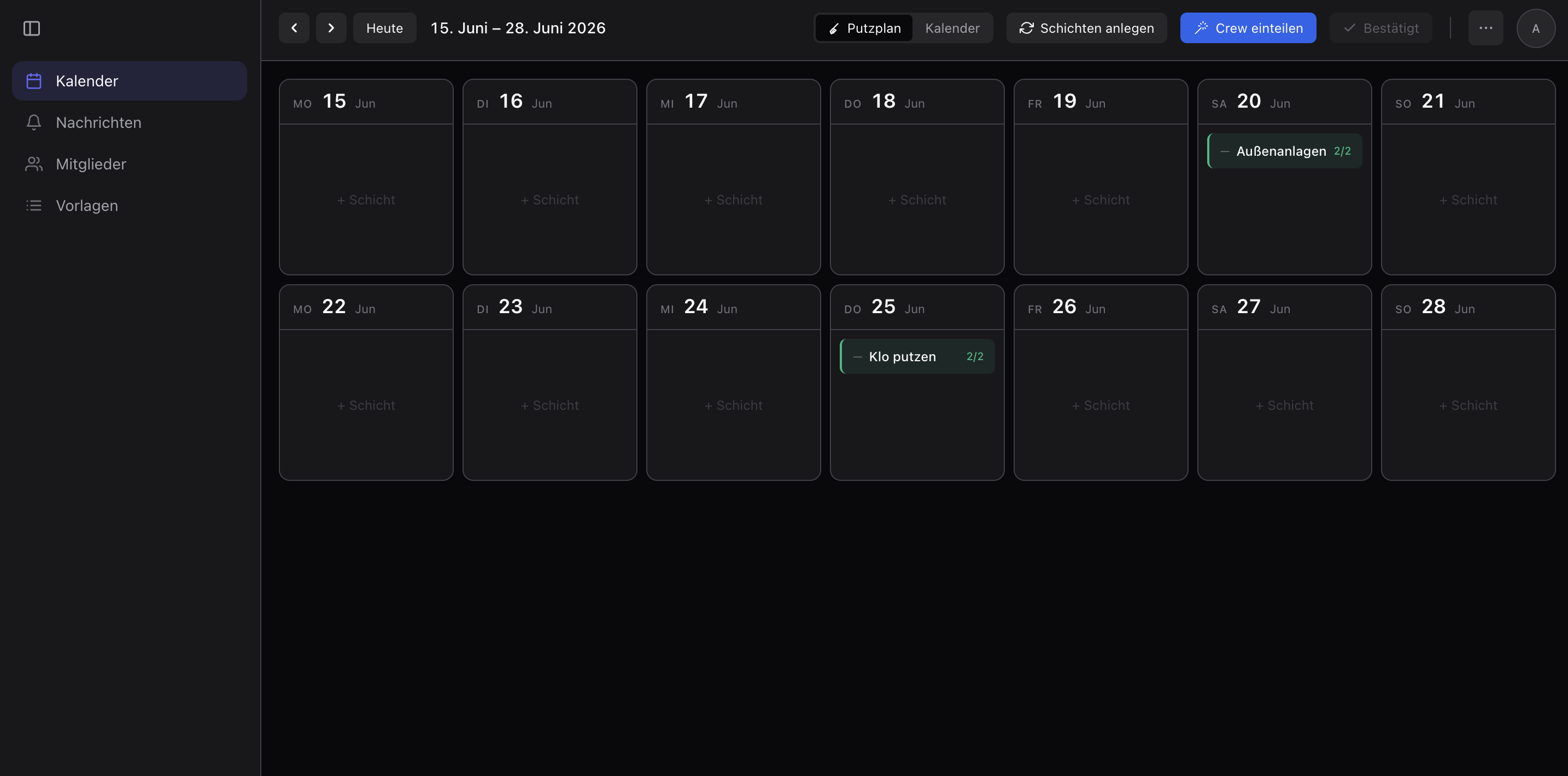
01 Plan a shift
Create shifts in the calendar, assign the crew, see open slots at a glance. Templates create recurring shifts without retyping.
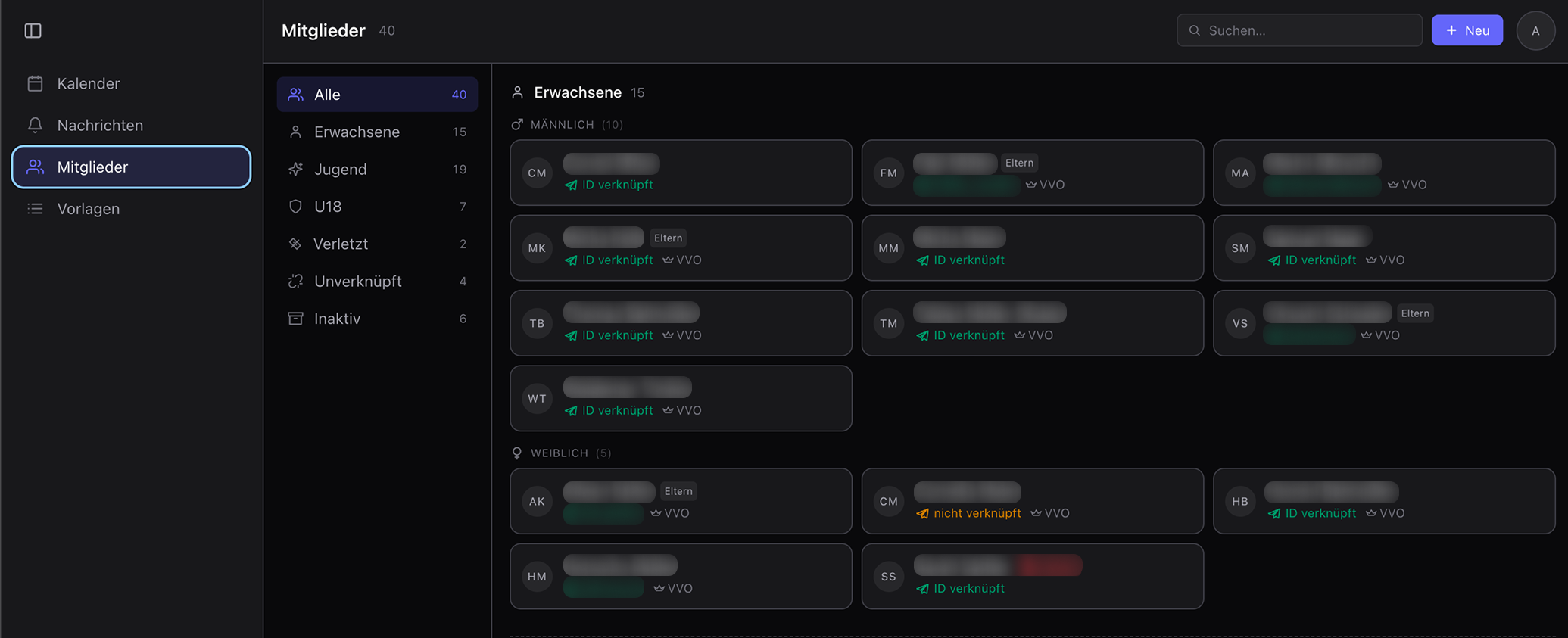
02 Members
Roles, availability and assignment stats per person — without a separate spreadsheet.
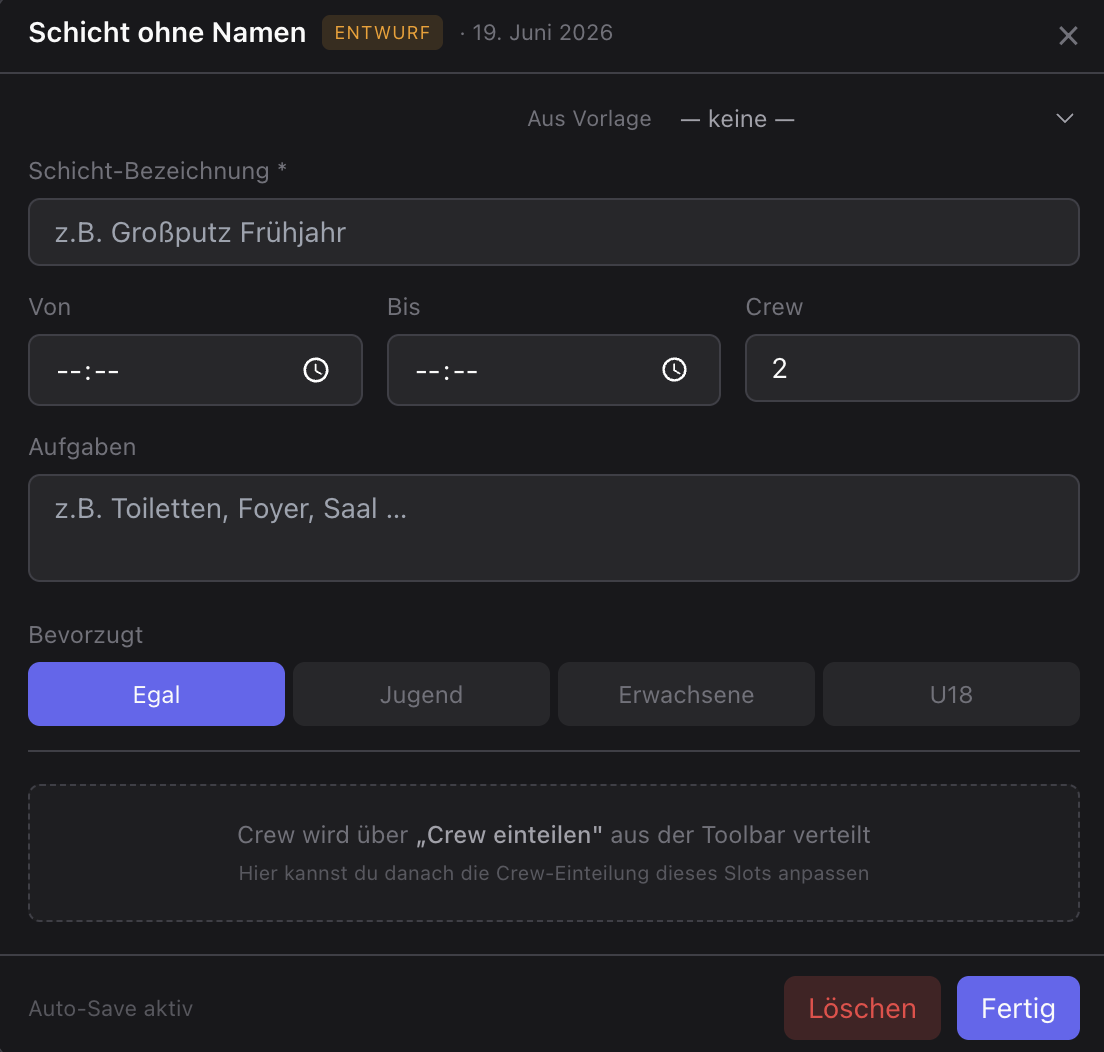
03 Configure shift
Tasks, crew size and templates. Defined once — from there the assignment runs by itself.
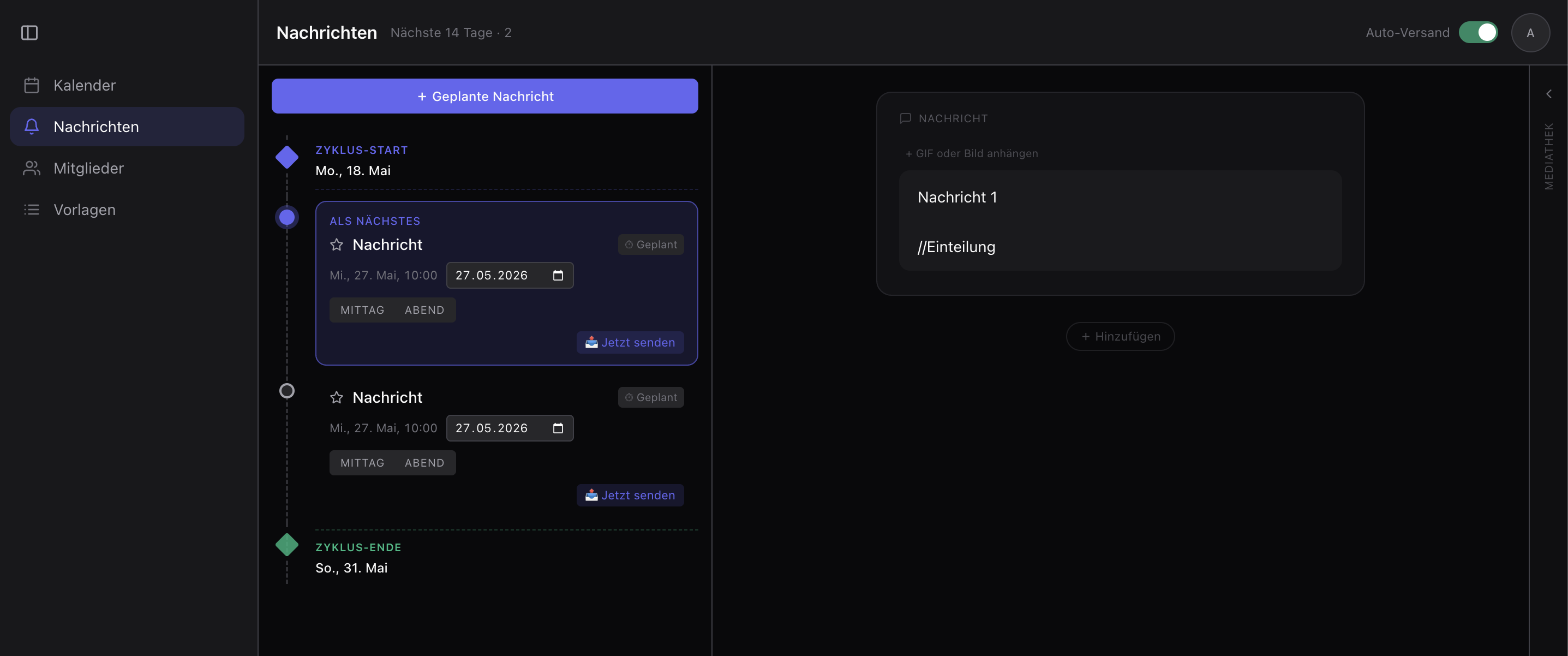
04 Compose message
Draft reminders and schedule them for the right moment — ping only the people involved.
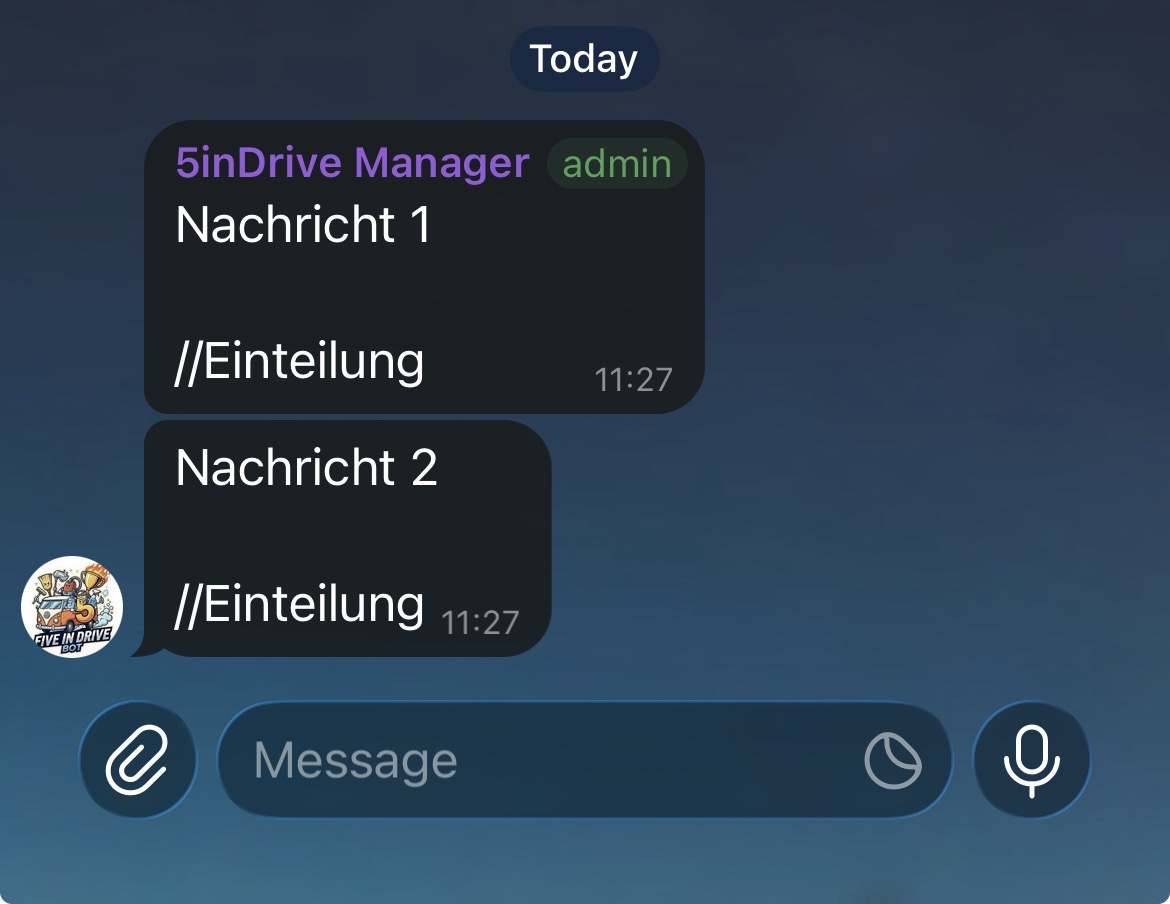
05 Delivery
The reminder lands automatically in the group chat. The bot handles it — nobody manages Telegram.
Architecture
Three layers, one loop — input on top, logic in the middle, persistence at the bottom.
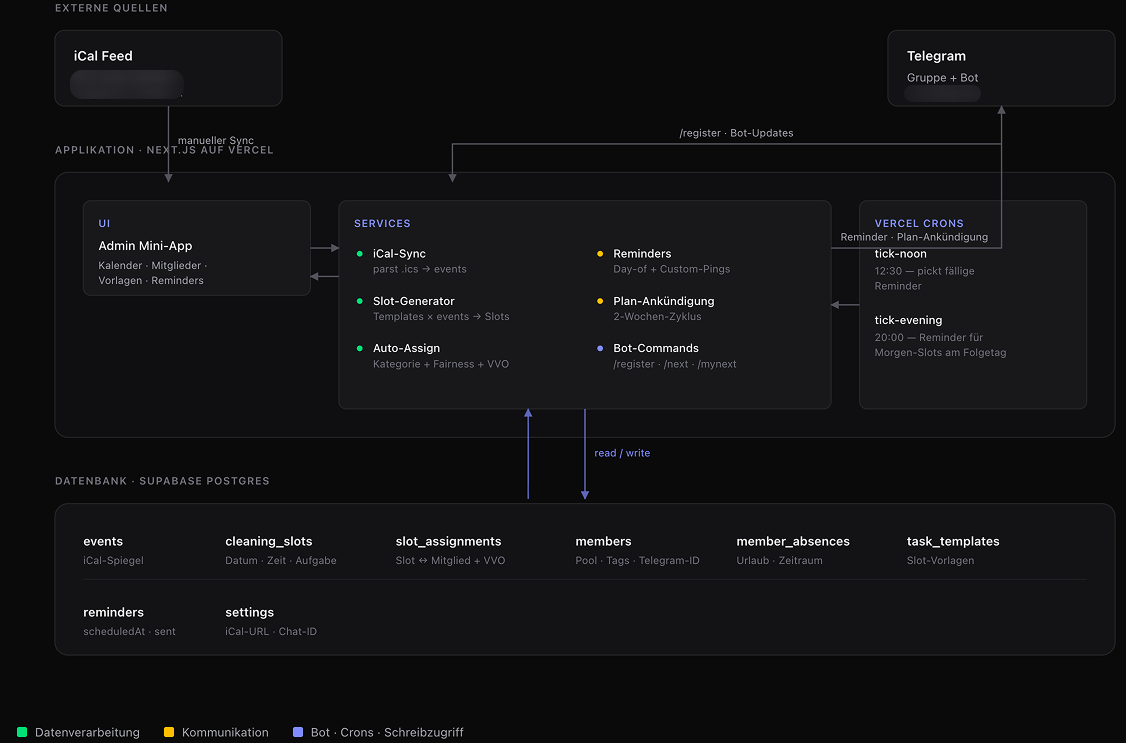
- 01Input
iCal · Telegram
The hall's calendar as an iCal feed delivers upcoming events, the Telegram bot brings registrations and cancellations in from the group.
- 02Compute
Next.js auf Vercel
Small services, one job each: read the calendar, turn templates into shifts, distribute people fairly, schedule reminders. Two cron jobs check twice a day for due reminders and push them into the group via the Telegram Bot API.
- 03Storage
Supabase Postgres
Events, shifts, assignments, members, absences, templates and reminder status. The DB persists — only the service logic ever decides anything.
The result is a clean flow: calendar in, shifts generated, people assigned, reminded at the right time — all without anyone having to maintain a spreadsheet.
